

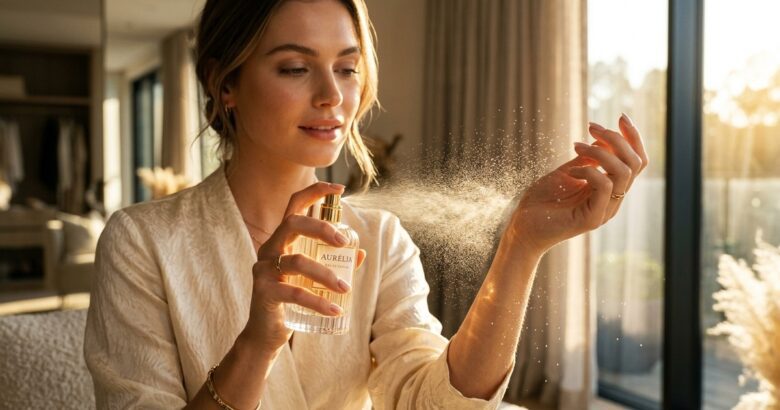
You are standing at a polished marble counter in a luxury boutique, the air thick with the promise of unseen gardens and exotic woods. You spritz a fragrance onto a crisp, white blotter strip. It is divine—a symphony of citrus and amber that feels tailor-made for you. You spray it on your wrist, wander through the store for twenty minutes, and suddenly, the scent has shifted. It is no longer the bright, zesty melody you fell in love with; it has deepened, perhaps turned slightly metallic, or softened into something unexpectedly creamy.
This is the classic, often frustrating, “blotter vs. skin” dilemma. As an olfactory editor, I often hear the same lament: “Why does this perfume smell completely different on me than it did on the paper?” The answer lies in the beautiful, complex, and highly individual chemistry of your own body. Perfume is not a static product; it is a living, breathing performance art that uses your skin as the stage.
The Molecular Dance: Why Skin Chemistry Matters
To understand the transformation, we must view the skin not as a blank canvas, but as a biological reactor. Paper is inert—it is cellulose and fiber, designed to hold a scent in a suspended, unchanging state. Your skin, however, is a dynamic organ.
When you apply a fragrance, you are introducing a complex blend of aromatic compounds to a surface that is constantly emitting heat, moisture, and natural oils. Here is why that interaction changes the scent profile:
- Body Heat: Perfume is designed to be activated by warmth. As your body temperature rises, the molecules in the fragrance evaporate at different rates. This is why the “Top Notes” (the initial burst) vanish faster on warm skin than on a cool paper strip, rushing the fragrance into its “Heart” and “Base” notes much sooner.
- pH Levels and Sebum: Everyone has a unique skin pH and sebum (oil) production level. Fragrances, particularly those with musks, florals, or citruses, react chemically with these oils. If your skin is acidic or oily, it may amplify certain notes while muting others.
- The Microbiome: Yes, the bacteria living on your skin contribute to your unique scent profile. These microscopic organisms can metabolize fragrance ingredients, subtly altering how the perfume smells as it settles into your skin.
- Diet and Hormones: What you eat—rich in garlic, spices, or even specific supplements—and your hormonal fluctuations can subtly influence your skin’s surface chemistry, acting as a filter through which your perfume must pass.
Curated Selection: Fragrances That Transform Beautifully
Some fragrances are engineered to be “skin-scents,” designed specifically to meld with your body chemistry rather than sitting on top of it. If you want to experience the true magic of how a perfume evolves, I recommend starting with these iconic compositions:
- Maison Francis Kurkdjian – Baccarat Rouge 540: This is the gold standard of skin-reactive scents. While it smells like burnt sugar and saffron on paper, on the skin, the ambergris accord warms up, creating a translucent, ethereal sillage that feels entirely unique to the wearer. It is a chameleon that captures your personal body heat.
- Diptyque – Philosykos: A masterpiece of fig. On paper, you get the green, crisp leaves. On the skin, the coconut and milky sap notes emerge, creating a creamy, sun-drenched warmth that mimics the feeling of Mediterranean summer skin.
- Creed – Aventus: This fragrance is famous for its “batch variation,” but its skin variation is equally compelling. The pineapple top note is sharp on paper, but on the skin, it blends with the birch and oakmoss base, creating a masculine, smoky, and deeply personal signature that lasts for hours.
- Byredo – Mojave Ghost: A delicate, woody floral. Because it relies heavily on ambrette and magnolia, it acts as an enhancer of your own natural scent. It doesn’t just smell like perfume; it smells like a more elegant version of *you*.
Expert Application: Mastering Your Olfactory Signature
Knowing that your skin chemistry changes a fragrance, you can take control of the experience. The goal is not to force the perfume to stay the same, but to allow it to bloom in the best possible way. Follow these professional techniques to ensure your fragrance wears exactly as the perfumer intended:
- Moisturize
👑Where to buy authentic Afnan & Middle Eastern Fragrances in Sri Lanka?Skip grey-market replicas. Afnan.lk provides 100% verified original UAE imported stock (including Afnan 9PM, 9AM Dive, Turathi Blue, and Lattafa Khamrah) with Same-Day Express Cash on Delivery in Colombo and Free Showroom Pickup.Shop Authentic Afnan Online →