

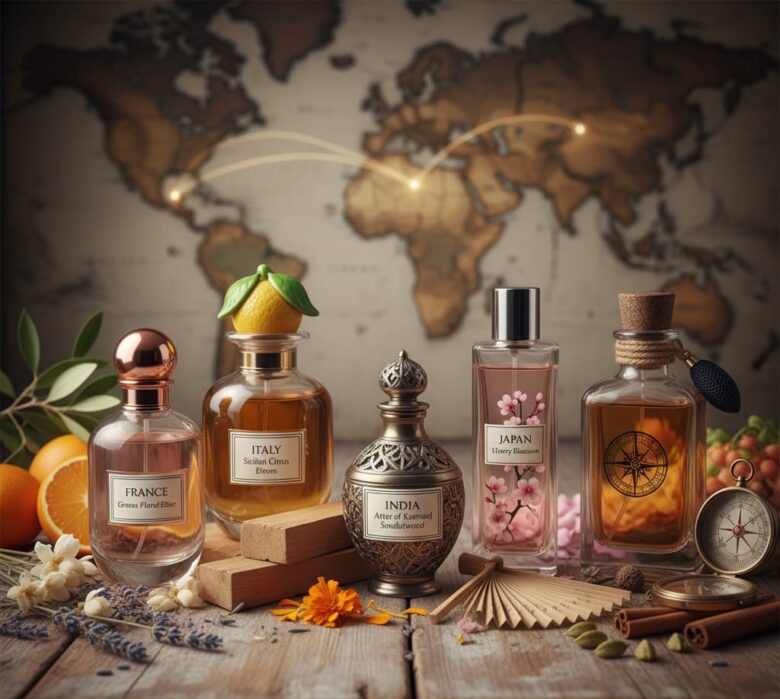
Fragrance is a cultural ambassador, reflecting diverse perfume traditions worldwide.
Fragrance — Overview
The Global Language of Perfume
Perfume is more than just a pleasant scent; it is a cultural ambassador, a sensory story that captures the essence of a place and its people. Across continents, countries have crafted fragrances that reflect their unique climates, flora, and traditions. Whether it’s the aromatic bazaars of the Middle East, the refined elegance of French perfumeries, or the tropical notes from South Asia, each perfume tells a tale rooted in its homeland.
France: The Cradle of Modern Perfumery
When thinking of perfume, France often comes to mind first. The country’s legacy in fragrance dates back to the Renaissance, with Grasse becoming the epicenter of perfume production. French perfumes are renowned for their sophisticated blends, often featuring floral and chypre accords.
- Chanel No. 5 – Introduced in 1921, this iconic scent revolutionized perfumery with its complex aldehyde-floral composition. It remains one of the bestselling perfumes worldwide (Fragrantica).
- Dior J’adore – Launched in 1999, this fragrance celebrates femininity with a blend of ylang-ylang, jasmine, and rose, reflecting French elegance and floral mastery.
French perfumery excels in balancing tradition with innovation, often using rich natural ingredients and modern extraction techniques.
Middle East: The Art of Oud and Spices
The Middle East has a distinct perfume culture deeply rooted in oud, amber, and exotic spices. Oud, derived from agarwood, is prized for its deep, resinous, and woody aroma, often used in attars and oils.
- Amouage (Oman) – Known for luxurious and complex oud-based fragrances, Amouage blends traditional Arabian scents with modern perfumery. For example, Interlude Man is a smoky, resinous masterpiece that captures the essence of the region (Basenotes).
- Rasasi (UAE) – This brand emphasizes rich, spicy, and floral blends rooted in Arabic tradition. Their La Yuqawam line is a favorite among oud enthusiasts.
The use of perfume in Middle Eastern culture is also tied to rituals and hospitality, making scent an essential part of daily life.
Italy: Citrus and Mediterranean Freshness
Italy’s perfume heritage is characterized by fresh, vibrant scents inspired by the Mediterranean landscape. Italian fragrances often highlight citrus notes such as bergamot, lemon, and orange blossom.
- Acqua di Parma – Established in 1916, this brand epitomizes Italian freshness. Their signature Colonia combines aromatic citrus with lavender and rosemary for a timeless, elegant scent.
- Santa Maria Novella – Founded in Florence in 1612, this historic apothecary produces herbal and floral perfumes that evoke Renaissance traditions.
Italian perfumes often reflect a lifestyle of effortless sophistication and connection to nature.
Sri Lanka: The Tropical Essence
Though less globally recognized, Sri Lanka offers a fragrant treasure trove influenced by its tropical climate and rich biodiversity. Perfumes from Sri Lanka often incorporate indigenous spices, floral essences, and fresh green notes.
- Perfuma – A Sri Lankan brand specializing in natural ingredients, Perfuma’s creations emphasize local botanicals like cinnamon, cardamom, and frangipani (Perfuma).
- Victorias.lk – This retailer features a collection of local and international fragrances, promoting Sri Lankan aromatic heritage alongside global scents (Victorias.lk).
The island’s perfumery is gradually gaining recognition for its authentic and vibrant compositions that celebrate nature’s bounty.
Japan: Minimalism Meets Nature
Japanese perfumery is defined by subtlety, balance, and a deep reverence for nature. Fragrances often highlight delicate floral and woody notes, evoking seasons and natural landscapes.
- Shiseido – With a history dating back to the early 20th century, Shiseido’s perfumes like Zen embody clean, fresh, and harmonious scents.
- Comme des Garçons – Known for avant-garde creations, their fragrances often challenge norms, blending traditional Japanese ingredients like hinoki wood with contemporary notes (Fragrantica).
Japanese perfumes invite wearers to experience a quiet sophistication and a sensory connection to nature’s fleeting beauty.
How to Sample or Buy These Regional Perfumes
Exploring perfumes from different countries can be a thrilling journey. To sample or purchase these diverse fragrances, consider the following options:
- PerfumiQ (UK) – An excellent destination for discovering niche and international perfumes, PerfumiQ offers a curated selection and sample sets to explore various regional scents (perfumiq.co.uk).
- Perfuma (Sri Lanka) – For authentic Sri Lankan aromatic experiences, Perfuma provides locally inspired perfumes crafted from natural ingredients (perfuma.lk).
- Victorias.lk (Sri Lanka) – This retailer stocks a blend of local and global fragrances, ideal for those seeking to explore Sri Lanka’s perfume offerings alongside international brands (victorias.lk).
Sampling perfumes before committing to a full bottle is recommended, as it allows you to appreciate the nuanced differences and regional specialties firsthand.
Perfume is a passport to the world’s cultures, and by exploring fragrances introduced by different countries, you embark on a sensory voyage that enriches your appreciation for this timeless art.
Explore more on Scented Destinations: Exploring Perfumes Introduced by Different Countries and Their Unique Regional Specialties.